

a presentation of ... Creative Healing, LLC
Opening The Heart Of Western Medicine

Field Guide to
What Really Matters:
Purpose
The Path of Purpose

When we reach the Path of Presence we learn that it consists of two separate paths: the "outer" and the "inner" path.
Your outer path is your external purpose in the world: your chosen career, the work you do to survive in day-to-day life. The ego and practical mind help plan and create this outer path for you.
But you also have an inner purpose that is guided by your Soul. It consists of spiritual lessons you may need to work on as you grow toward higher consciousness.
Sometimes our inner and outer paths align when our inner calling can be satisfied with sustainable work in a compatible field. But you can follow your inner path no matter which outer path is available to you.
The Broken Branch
I’ve always had an affinity for trees. When I was a girl I would climb to the top of the silver maple tree in our backyard to read books, or I would hide by myself under the branches of our weeping willow tree that touched all the way to the ground. Trees were my refuge when the world felt too painful.
Many, many years later I found an unexpected teacher in an old oak tree that I discovered while on a writing retreat. I had signed up for the retreat in a desperate attempt to unblock my creativity as a writer. I had always believed writing was one of my callings but I hadn’t been able to access it for years since my father died.
During the retreat we were sent outdoors on a vast wooded property to find a place to sit and write for a few hours. I found a large old oak tree, which felt like home to me, and huddled against the trunk with my notebook. After multiple failed attempts to start writing something … anything … I gave up and put my notebook down. Maybe I was wrong about my “calling”—maybe I wasn’t meant to write at all—maybe I just needed to give up that fantasy.
I was suddenly overwhelmed with frustration and grief as I recognized that I still felt completely broken inside so many years after my father’s suicide death. Maybe my dream of writing had been too badly shattered and could never be repaired. I began to sob as I released all the hopes and expectations I’d been carrying. I hugged my knees to my chest and let the tears flow.
Amid that barrage of sadness I became aware of a sensation of being patted on my left shoulder, as if being comforted. I turned to see that a broken branch from the oak tree was hanging downward and tapping my shoulder as it swayed in the breeze.
Here this tree that had been alive for hundreds of years through wars and pandemics and floods and fires was somehow offering me comfort. I felt a soothing sensation of peace wash over me as I recognized that I am part of a much larger story unfolding across galaxies and millennia and this sadness was just a blip in time.
In my notebook I wrote: “What is broken heals.” This broken branch was offering me a chance to heal. If a broken branch could fulfill a purpose like that, then maybe I could find a way—in my own broken state—to still write. Like the Japanese practice of kintsugi--repairing broken pottery by filling the cracks with gold--I can view my own broken places as opportunities to let my light shine out to others.
That moment under the oak tree was pivotal for me. I learned that I would have to go through my wound—and not try to escape or avoid it—in order to follow my purpose as a writer. That was the day that I started writing from within myself about the pain I was carrying instead of trying to write for the world outside of me.
The world tells us to follow our bliss ... dream big and explore our passion.
But in reality we need to go within to our darkest places.
Search out the wounds and brokenness.
The inner path of purpose begins there.
Embracing the brokenness is the medicine we need to heal it.

Click
Photos

Sun rays shine through oak tree with broken branch
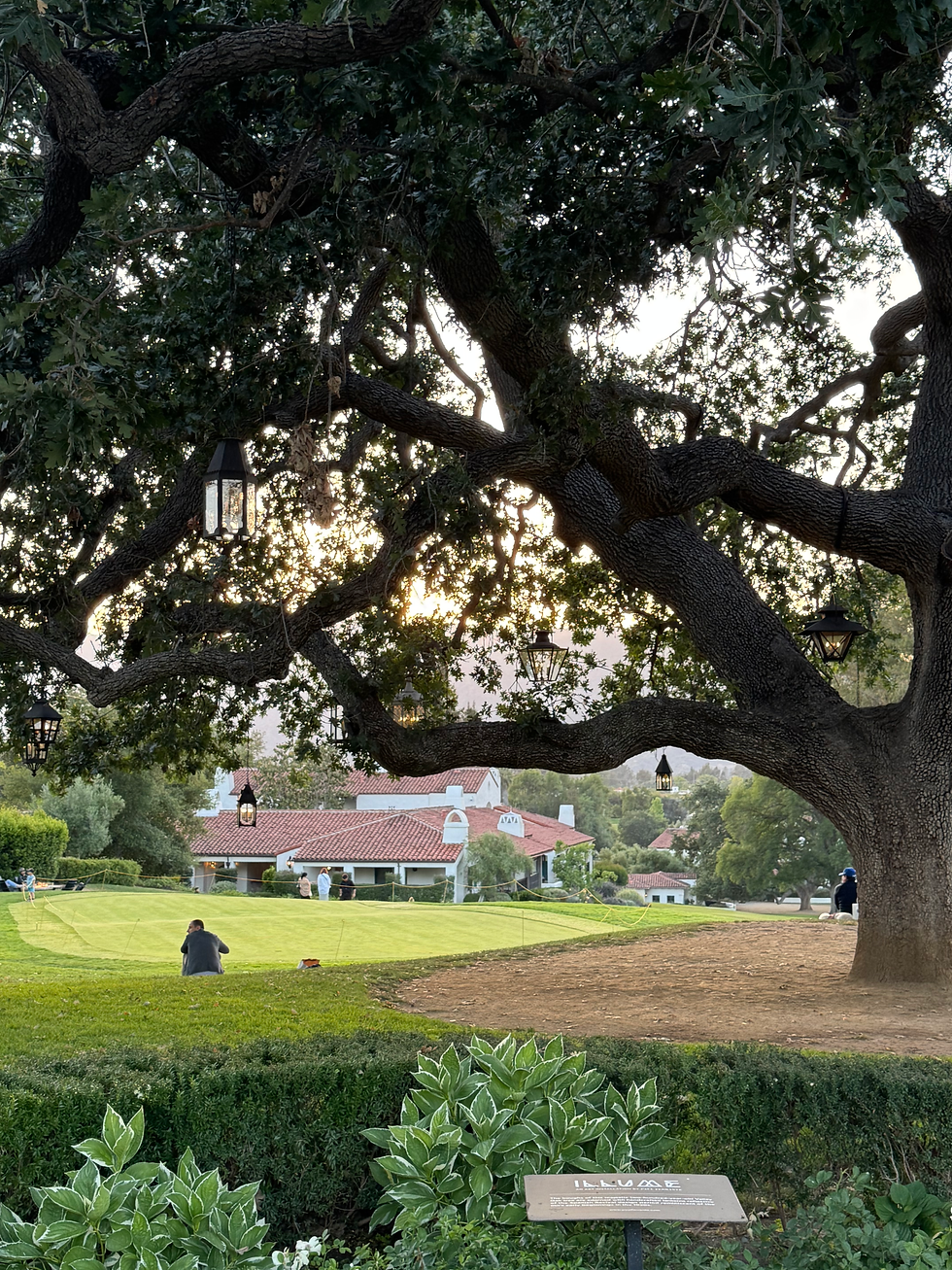
Ancient oak tree on beautiful estate

Cracked bowl showing kintsugi technique of mending pottery
Sun rays shine through oak tree with broken branch
Music

by Max Richter

Bedside Wisdom
One of my hospice patients was a younger man whose life had been upended by multiple sclerosis. He was in the midst of a successful career as an extreme skier—traveling the world and skiing glaciers on every continent—when his symptoms began.
When I met Matt he was at the end-stage of MS and I wondered how he had coped with such a tragic loss of his career and identity at a young age. Matt was bedbound at that time and needing care around-the-clock. I had expected him to be angry or resentful about this challenge he had been given in life, but he was joyful and filled with peace.
He told me that in fact he had always been an angry and unhappy person—even when he was at the peak of his career. But everything changed for him one day after his diagnosis.
The first symptom to strike him was loss of vision and he quickly became legally blind but he wanted to continue skiing as long as he could. He traveled with friends to New Zealand where he had planned to ski one of the steepest chutes on Treble Cone Mountain, even with very little remaining vision.
He said his friends left him at the top of the ridge at his request because he needed to prove to himself that he could still fulfill his passion. He managed to ski down the chute and then climb back up and ski it again several times before he collapsed in exhaustion.
Recognizing that this would be the last time he would ski under his own power he began to weep. Clearly skiing was his life's passion … his destiny. He couldn’t understand why it was being taken from him along with his vitality. He asked, “Why God? What is my purpose if not to ski? Why am I here?”
Then Matt told me he heard an answer from deep within: “This is your path. You must go through this. You must tell your story.”
From then on Matt understood that his diagnosis was leading him somewhere he might not have gone before. He was being shown a different path for his life that had deeper meaning and the possibility of finding joy and peace.
Though it wasn’t easy, Matt worked on his inner growth and told his story to as many people as possible. He began to meditate, which he told me at the end of his life was the only thing he could still do by himself. Each day he would face whatever happened by saying with gratitude, “This is what life is giving me today.”
Matt's physical body was “broken” and his outer path took a significant detour.
But he discovered his inner path and navigated it with gratitude.
And he became a source of healing for himself and others.
Practices
For the Path of Purpose these practices help you find your calm center so you can begin to hear your inner guidance. Utilize any that seem helpful to you as you contemplate your inner and outer paths.
Hover over each image to read about the practices
designed for this path.

Study your “Life Journey Map” and see how all of the detours of your path have led you to exactly where you are right now. Write about how one of those detours was the perfect precursor to your current place in life. How did that detour affect your outer purpose? How did it reveal your inner purpose?

Set aside 20 minutes for this spontaneous walk. Begin walking with no predetermined route. At each corner or intersection proceed in the direction that seems to call to you. Pay attention to little details like flowers growing through a crack, birds singing on a wire. Make note of what you see. After 10 minutes reverse your route and return home.

Imagine you are floating on a small boat in a lake with rippling water all around you and clouds covering the sky. With each inhale see the surface of the lake grow calmer and as you exhale the clouds drift away. Continue until the still water reflects back the blue of the sky and you cannot tell where lake ends and sky begins. In this still light you are ready to receive any guidance that comes today.

Breath of Gold As you breathe in for 6 counts imagine you are taking in gold sparkles that fill every gap and broken place within you. As you breathe out for 8 counts see golden light that radiates in every direction from the cracks and wounds within you. Repeat for several breaths. The broken places are where you transmit your beautiful light to others.

Broken Things From your observation spot notice something that you might describe as being "broken" or not functioning as it should--perhaps something in nature or a manmade item nearby. What happens to broken things? Are they removed or do they remain as reminders?

Journaling Prompts: The Japanese have a term called Ikigai that describes your "reason for being" or what is worth waking up for every day. The Ikigai is the intersection of What you love, What you are good at, What the World needs, and What you can be paid for. Write about these 4 things and what gives meaning to your life right now.
Additional Resources
Here you'll find "pocket wisdom" (Field Notes) to take with you, a link to download the Practices as a handout, and a companion Podcast episode.

Pocket Wisdom 1. The deepest wound you carry is a key to your inner purpose so begin to embrace and cherish it. 2. You may experience a calling that inspires you to do inner work rather than to choose a particular career path. 3. Your inner purpose will always return for you no matter what outer path you choose. Write these in your journal to remember as you move on to other paths.


Explore Another Path
Choose what you'd like to work on next by clicking on the corresponding image below:




You are here